
Simple Preschool Learning Journal for Screen-Free Mornings
There are mornings in our house that feel calm and intentional…
and there are mornings when the baby needs to nurse, the big kids need help with math, and my preschooler is asking for a show before I’ve even had coffee.
For a while, the TV became our default. Not because I wanted it to — but because I needed my hands free and give my brain time to function.
But I kept feeling that quiet tug. This was not the best way to start the day off for my 10 year old and 3 year old. Give my 10 year old some graphic novels and he’d be good until breakfast. Without tv though, my 3 year old wanted my attention…whether I was ready or not.
So I started something simple. Something intentional without adding more to my ‘to do’ list.
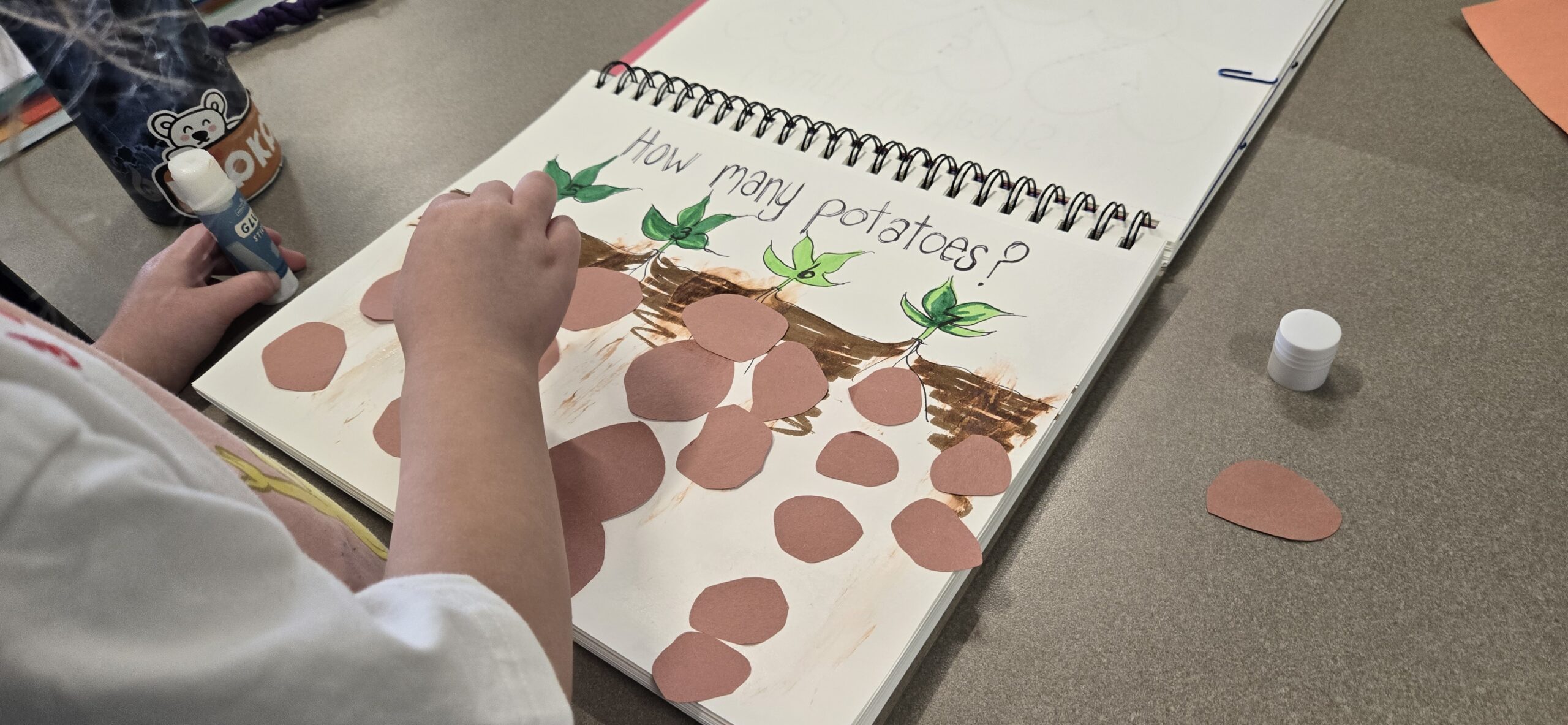
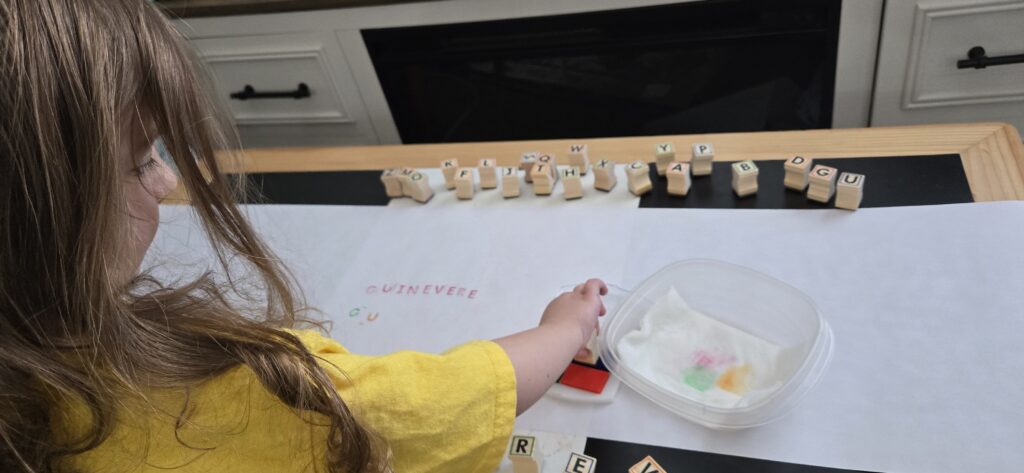
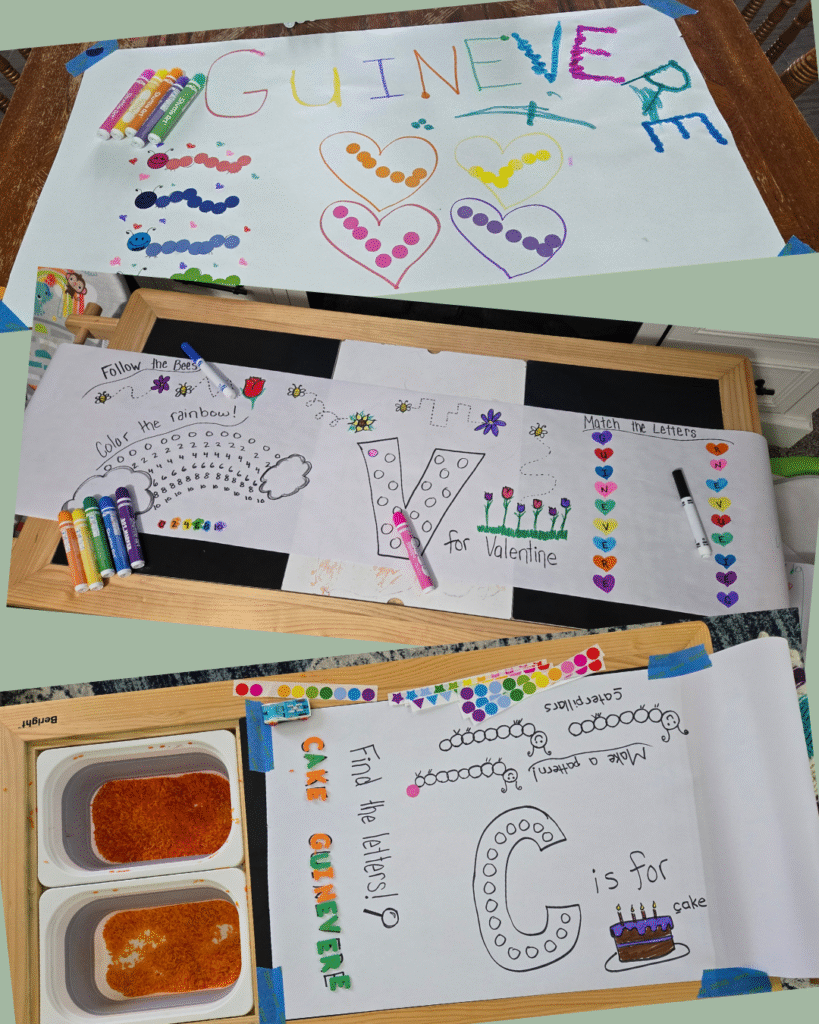
I began making her a learning journal — nothing fancy, just pages we work through together — and on some mornings, instead of turning on a show, I leave out a long sheet of paper across her sensory table with a few simple activities drawn out just for her.
And it has quietly changed our mornings.
Not in a Pinterest-perfect way.
But in a gentle, doable, sustainable way.
There are still tv mornings, but now they are balanced with quieter starts.
Why a Learning Journal?
I wanted to create something my little one would be excited about — but that didn’t require a ton of prep from me.
While searching for preschool learning activities, I kept coming across the idea of learning journals. The concept felt simple and sustainable, so I decided to create one of my own.
Creating this learning journal for my three-year-old has helped in more ways than I expected.
It gives her a way to be included in our homeschool rhythm. She watches her older siblings work and naturally wants to be part of it. And while I’m not handing her complex math worksheets, I can offer activities intentionally created just for her stage of learning.
She loves having a “workbook” that belongs to her — something special and set apart. Some of the activities she can do independently. Others require a little guidance. But most importantly, I sit beside her while she works.
She thrives in that one-on-one attention.
I also love that everything is contained in a simple sketchbook. It keeps our activities organized and allows us to take it on the go — to the couch, outside, or even in the car if needed.
The mobility of the learning journal fits naturally into our ever-evolving homeschool rhythms.
So What Is Our Learning Journal?
Nothing fancy.
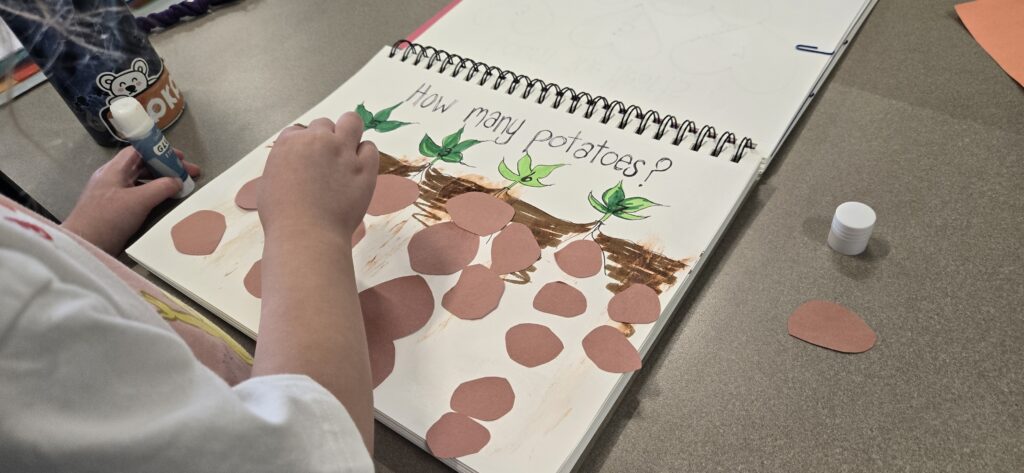
It’s simply a 9×12 mixed-media sketchbook — like this one on Amazon. The mixed-media designation is important because the pages are thick enough to hold up to glue, markers, dot paints, and the occasional over-enthusiastic scribble.
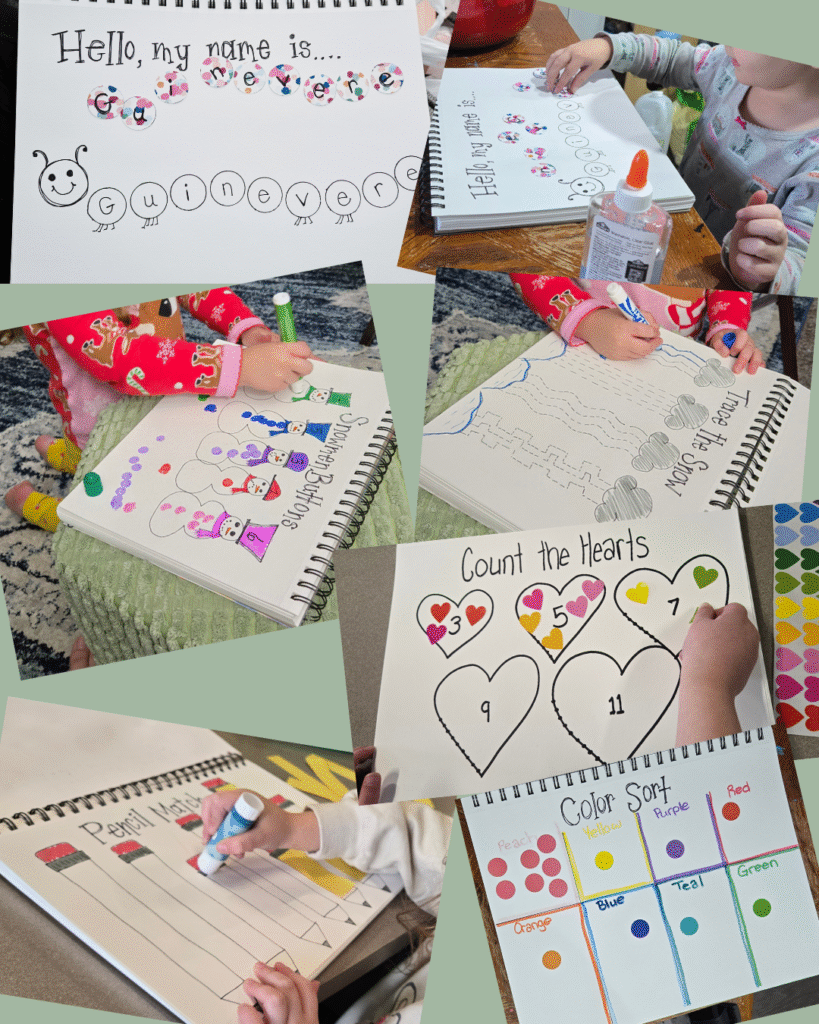
Inside, I draw simple activities directly onto the pages.
The focus varies depending on what we’re working on that week:
- Tracing lines and shapes
- Letter recognition
- Name practice
- Simple counting
- Measuring and comparing
- Color sorting
- The occasional animal page (because she will always choose animals 🐾)
It’s not a formal preschool curriculum.
It’s more like guided exploration — activities designed just for her stage, presented in a way that feels special.
Some pages are simple and open-ended. Others are a bit more structured. I change up the presentation to keep things interesting, but the core skills stay gentle and age-appropriate.
I don’t draw these up daily. Most weeks, I’ll add a few pages at a time — usually a couple of times a week when I have a quiet moment. And usually 3 pages at a time.
Because it’s all contained in one sketchbook, it travels easily — to the couch, to the table, even to her brother’s ninja warrior class when we need something to keep little hands busy.
And that flexibility is what makes it work for our season.
Our Simple Morning Invitations
The learning journal activities were received so well that creating simple morning invitations felt like a natural next step.
Instead of opening the day with screens, I began using her sensory table [similar to this one] and a roll of paper [these are the ones I bought]. Before heading to bed, I’ll unroll a long sheet across the table and draw out a few simple activities — tracing lines, counting hearts, circling shapes, following a path, sometimes a little animal to color.
Then I leave it there.
An open invitation waiting for her in the morning.
These are the mornings when the television isn’t even mentioned.
She walks to the table first.
Sometimes I’ll add a small sensory bin alongside the paper — scoops, pom-poms, counting bears — and even her brother will pause to join her instead of reaching for the remote.
It’s not elaborate.
It’s not time-consuming.
But it changes the tone of our mornings in the gentlest way.
In a season that often feels full and layered — teen lessons, toddler energy, baby naps — these simple invitations have become a soft anchor. They don’t eliminate the chaos. But they shift it. They help us begin gently.
Why This Works Better Than Screens (For Us)
I don’t believe screens are the enemy. We still use television sometimes, especially on long days or when someone isn’t feeling well. Or those inevitable early mornings that happens with littles.
But I’ve noticed something different about the mornings when I leave out an invitation instead.
It regulates her.
Instead of the quick stimulation and then the inevitable crash, she settles into something steady. Her hands are moving. Her mind is engaged. There’s no rush to finish a show before the next one starts.
It also buys me 20–30 focused minutes — which, in a house with multiple ages, feels like a gift – especially when my cup of coffee is still hot. I can help my older kids get started on their work while knowing she’s nearby and content.
More than anything, it makes her feel included.
She isn’t being “occupied.” She’s participating. She has work of her own. And that small shift changes the tone of our morning.
There’s more connection and less distraction. More conversation and less background noise.
The house feels slower. Calmer.
Again, this isn’t about eliminating screens completely. It’s simply about having another option — one that begins our day with intention instead of reaction.
And in this season, that has made all the difference.
What I’ve Noticed Since Starting This
The changes haven’t been dramatic or overnight. They’ve been quiet.
But they’ve been real.
Her fine motor skills have grown noticeably. The tracing that once felt wobbly is steadier now. She’s started writing letters on her own — not because I’ve required it, but because she wants to.
She asks for new journal pages.
That alone tells me something.
There’s pride there, too. She beams when I take pictures of her work. She flips back through the sketchbook to show me older pages, pointing out what she remembers doing. It belongs to her — and she knows it.
The very first morning I left paper across the sensory table, she walked over slowly, looked at it, and asked, “You made this for me?”
That moment has stayed with me.
Because at the heart of it, this isn’t just about early literacy or fine motor development. It’s about being seen. About being included in something the big kids get to do.
It hasn’t magically created hours of independent play. She still needs me. She still interrupts. She’s still four.
But these small invitations have given her ownership. And that feels significant.
If You Want to Try This
If this sounds like something that might bless your mornings too, you don’t need to overhaul your homeschool or buy anything elaborate.
You can start very simply.
Step 1: Choose a notebook.
A sketchbook, binder, or even stapled printer paper works. The goal isn’t perfection — it’s containment. Having everything in one place makes it feel special.
Step 2: Keep the activities simple.
Tracing lines. Circling shapes. Counting objects. Completing patterns. Practicing letters in her name. It doesn’t need to be complex to be meaningful.
Step 3: Prep one page (or one table sheet) the night before.
Five quiet minutes before bed can change the tone of your entire morning. Think of it as setting out an invitation rather than planning a lesson.
Step 4: Rotate themes gently.
One week you might focus on animals. Another week letters. Another simple counting. You don’t need a strict schedule — just small shifts to keep it fresh.
Step 5: Keep expectations low.
Some mornings will be focused. Others won’t. That’s okay. The goal isn’t perfection — it’s participation.
You don’t need a laminator or a color printer.
And you don’t need a fancy sensory setup.
You just need a marker, some paper, and the willingness to sit beside her.
Start small and see how it goes. Adjust as you figure out what works and what doesn’t.
That’s more than enough.
A Gentle Word for the Overwhelmed Mom
If you’re homeschooling multiple ages right now — a teen at one end of the table and a toddler at the other — I see you.
If you’ve ever turned on a show just so you could think clearly for a moment, I see you there too.
This season doesn’t require perfection. It doesn’t require elaborate systems or beautifully color-coded plans. It just asks for small, steady choices that move your home toward the tone you want.
For us, that has looked like a sketchbook.
A roll of paper.
A few minutes the night before.
Not because it solves everything.
But because it begins the day gently.
Sometimes homeschooling isn’t about big curriculum shifts or major overhauls.
Sometimes it’s just about leaving something beautiful on the table before they wake up.
And trusting that small things, done with intention, are enough.
Sometimes the smallest preparations become the steadiest parts of our days.