Board Games That Count as Homeschool in Our House
A few of our family’s favorite games that build strategy, math, and curiosity.
This post may contain affiliate links. That means I may earn a small commission if you purchase through them, at no extra cost to you.
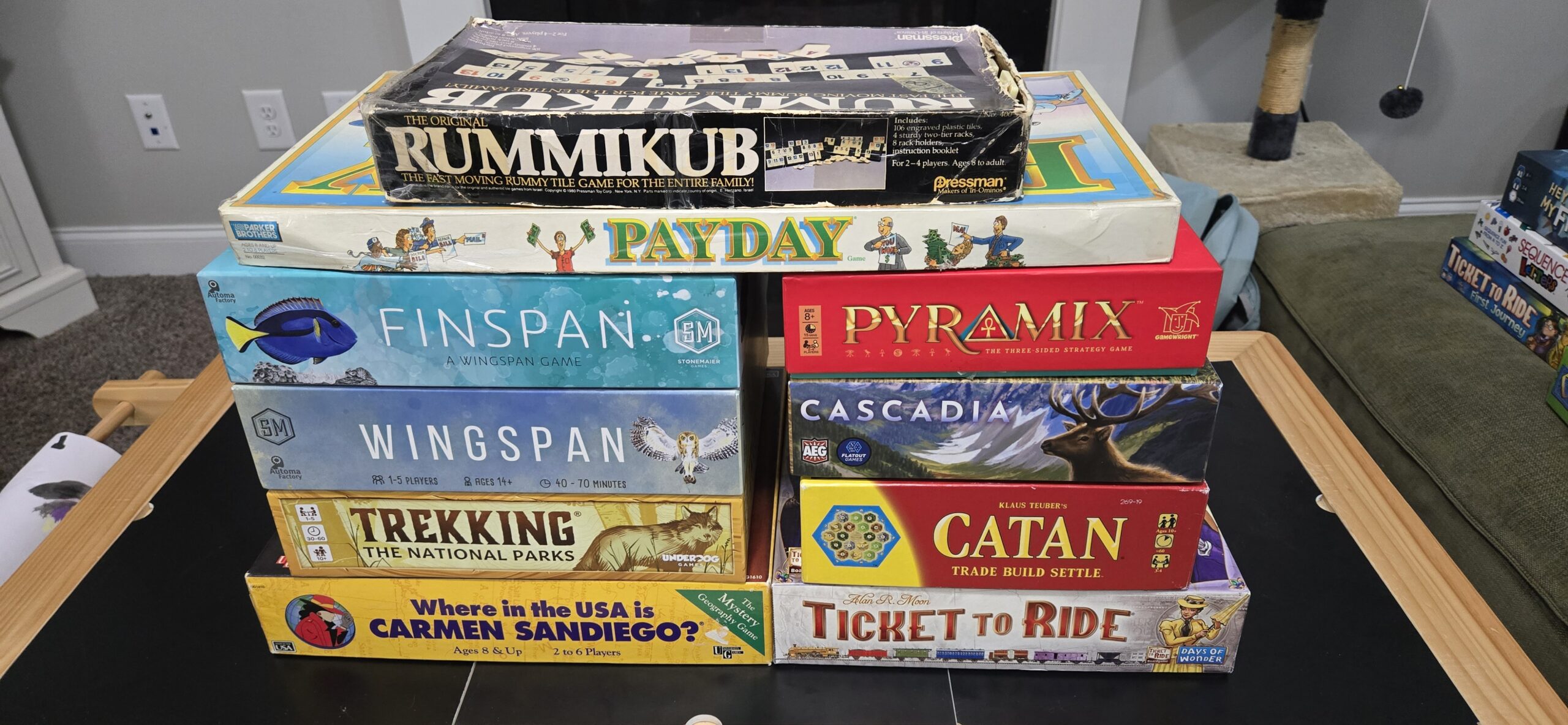
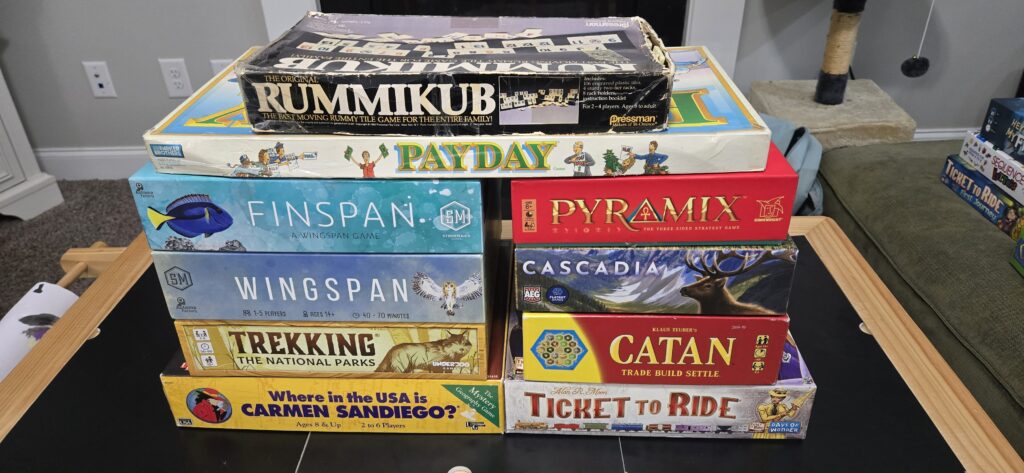
One of the learning tools that shows up most often in our homeschool doesn’t look like school at all.
It looks like a stack of board games.
Over the years, games have become one of our favorite ways to spend time together as a family. They bring laughter, a little friendly competition, and — without anyone realizing it — a surprising amount of learning.
Strategy, math, geography, pattern recognition, reading, probability… all of these show up naturally when we play.
More importantly, they give us a chance to gather around the table together.
Here are a few of the games that get played most often in our house.
Strategy Games We Love
Some of our favorite games challenge the kids to think ahead, plan moves, and adapt when things don’t go as expected.
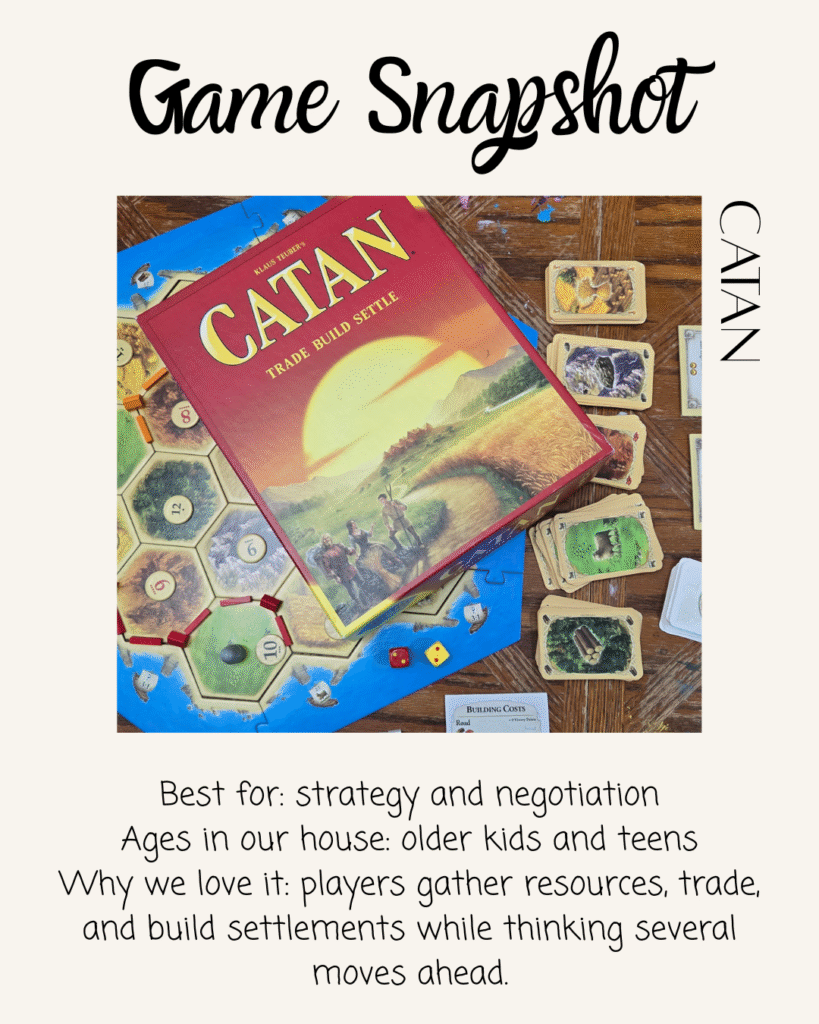
Catan has been a long-time favorite for building strategy skills. Players collect resources and build roads and settlements while negotiating trades with each other.
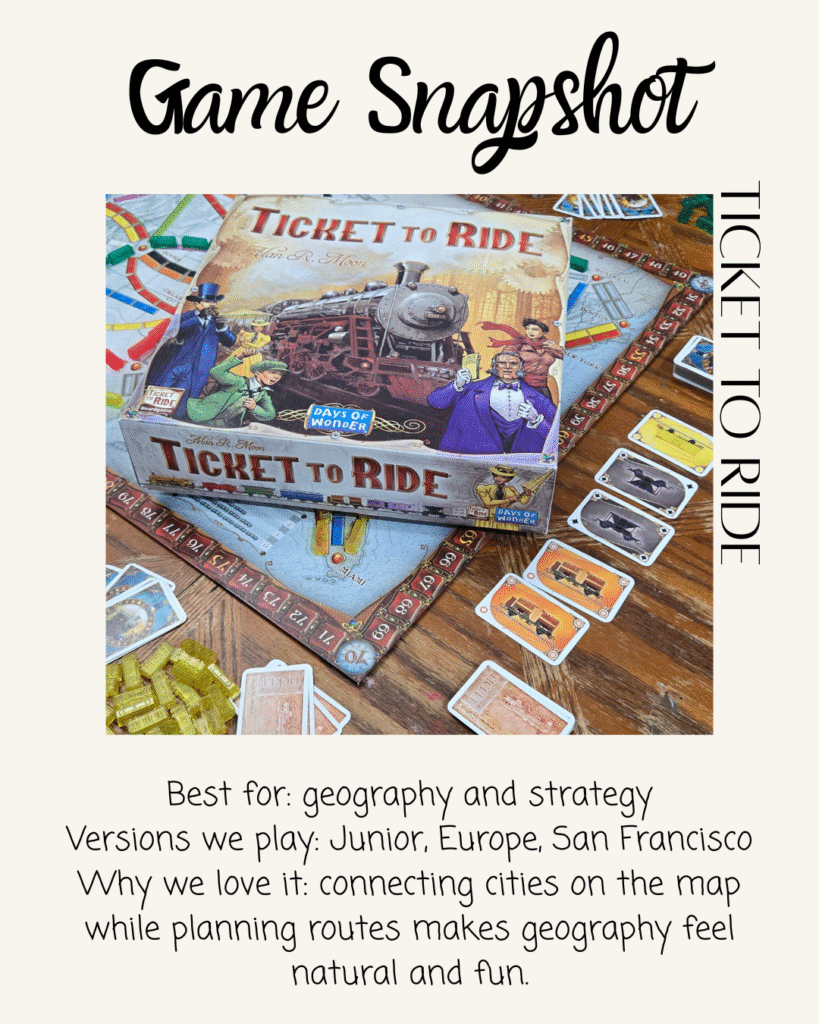
Another game we reach for often is Ticket to Ride. We actually have several versions in our house — Ticket to Ride Junior for younger players, along with the Europe and San Francisco versions. Each one introduces geography and planning in a way that’s easy to learn but surprisingly strategic.
We also love Carcassonne, where players build a landscape one tile at a time while claiming cities, roads, and abbeys. It’s simple to learn but offers endless opportunities to think creatively about your next move.
Nature-Inspired Games
Some of our newer favorites combine beautiful artwork with thoughtful gameplay.
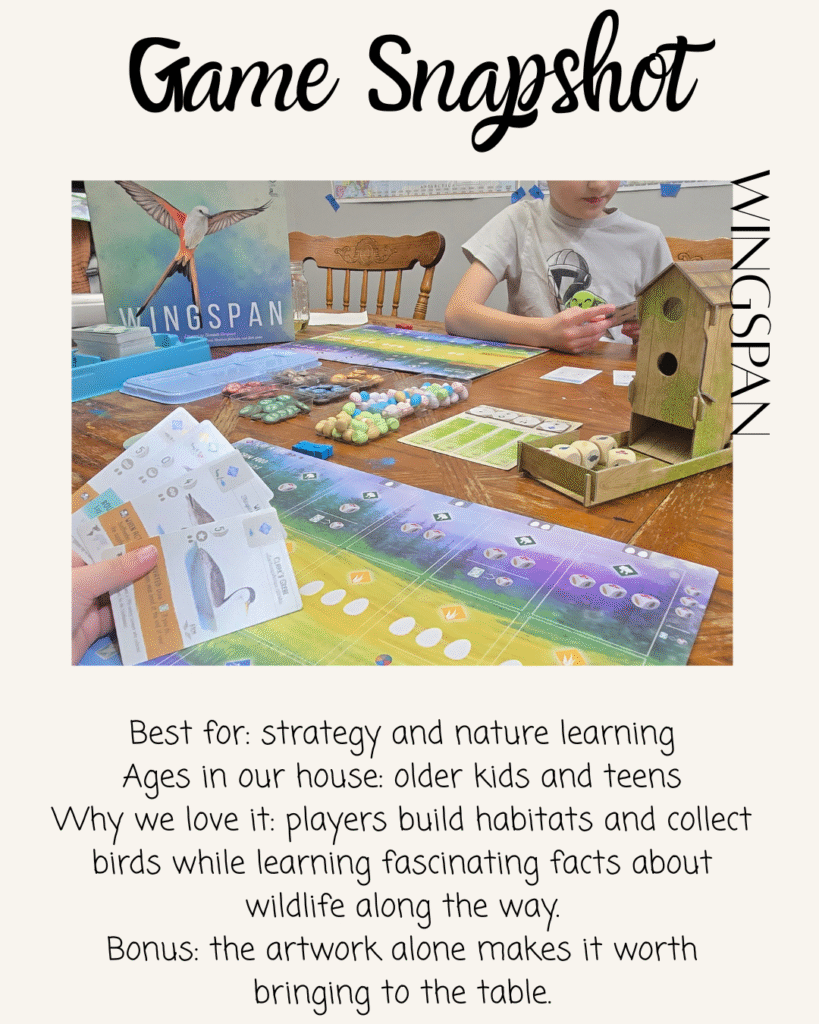
Wingspan, Finspan, and Cascadia have all become favorites in our house. These games celebrate wildlife and ecosystems while encouraging players to build patterns and plan strategies.
They’re also just stunning to look at, which makes them especially fun to bring to the table.
Games That Sneak in Math
A lot of math practice happens naturally through games.
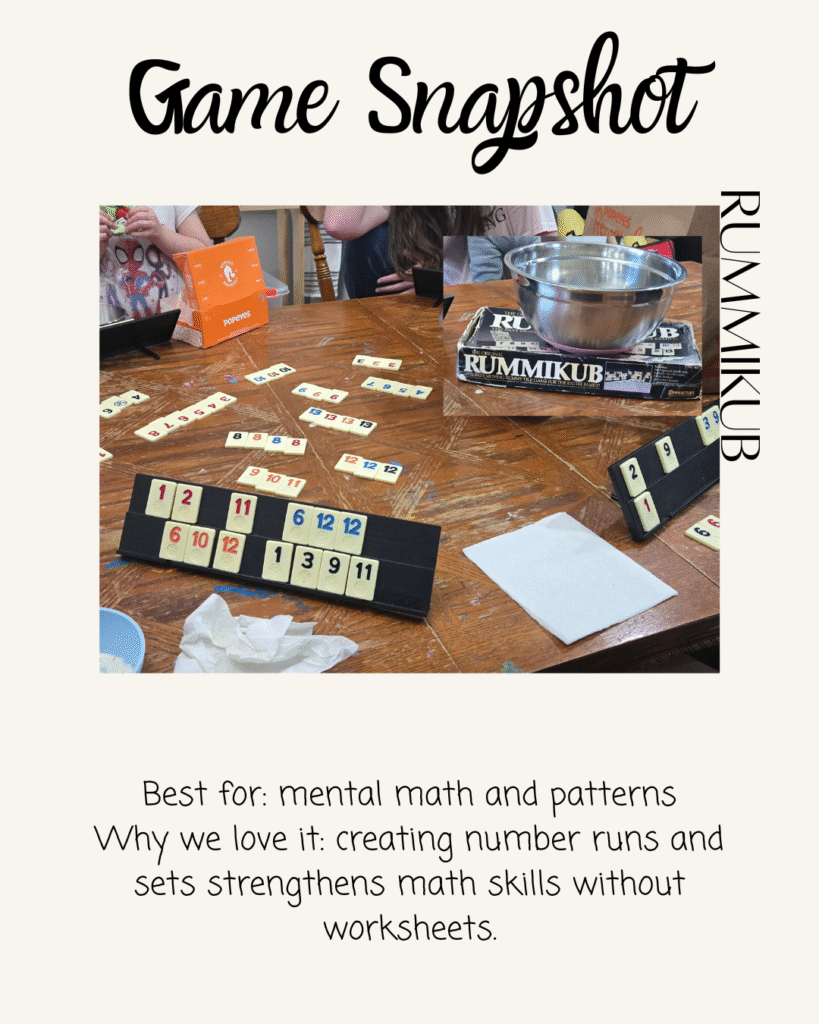
Rummikub is one of our favorites for this. Players create number sets and runs, which strengthens pattern recognition and mental math without anyone feeling like they’re doing a worksheet.
Classic games like Payday, Life, and different versions of Monopoly also reinforce money skills, counting, and basic financial concepts.
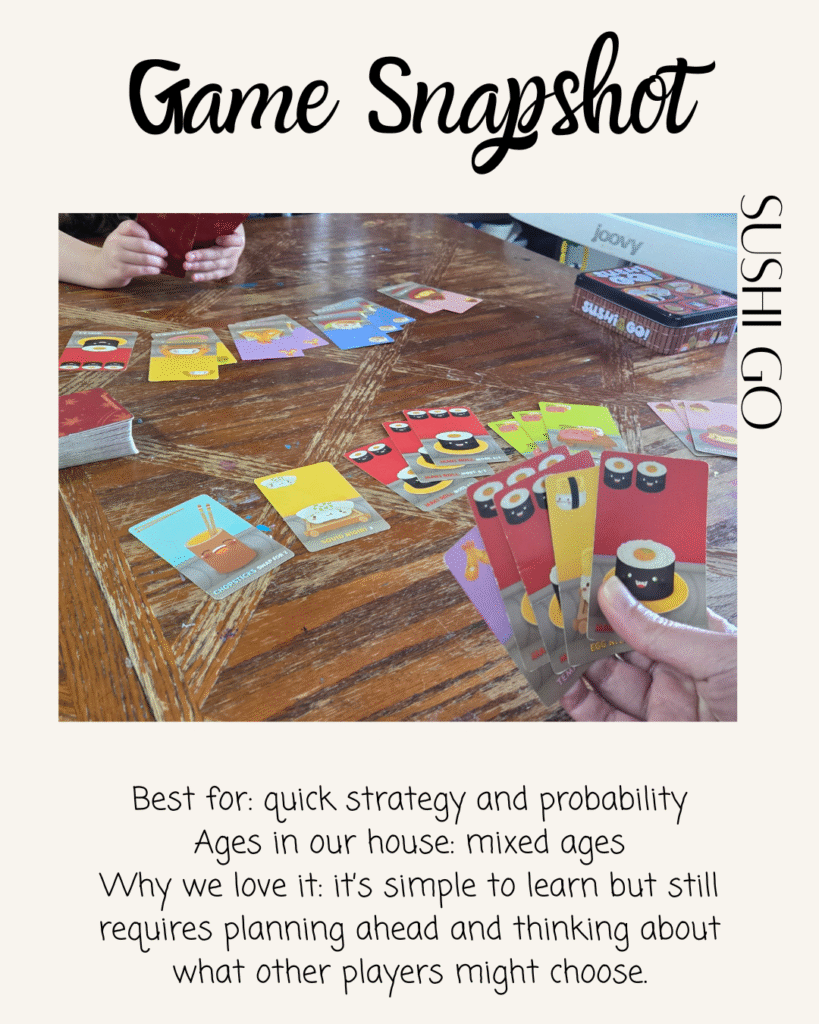
Even quick games like Sushi Go, and Sushi Go Party, build probability and decision-making skills.
Geography and Learning Games
Some games connect beautifully to what we’re learning in homeschool.
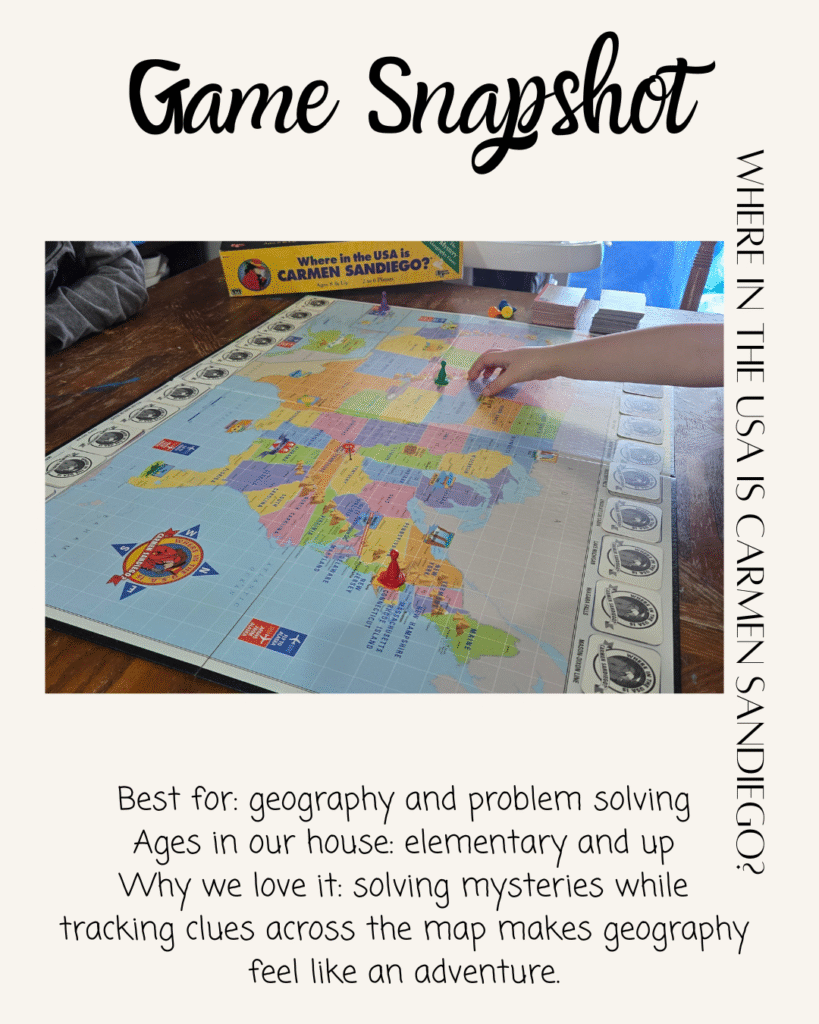
Where in the USA is Carmen Sandiego? has been a fun way to reinforce geography skills while solving mysteries across the country. The trivia questions about the country’s events, people and places even have my husband and I learning new things.
[This board game can be purchased new on Amazon, I provided a link, but it is expensive. Here is a link to an ebay search where you can find the game at half the price. Since this is an older game, ebay is a better bet. There is also “Where in the World..” and “Where in Space..” if you want different areas of focus.]
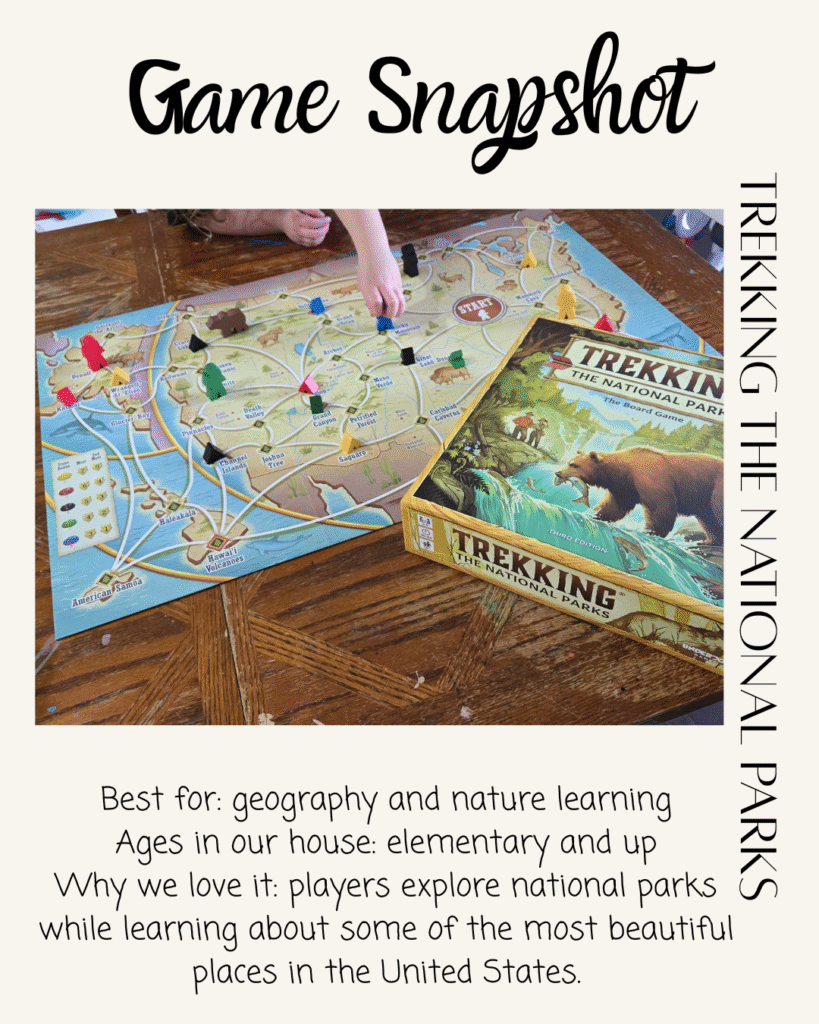
We also recently added Trekking the National Parks, which fits perfectly with our family’s love of nature and travel.
Games for All Ages
Because we’re homeschooling multiple ages, which I talk about here, we also keep plenty of games that younger kids can enjoy.
Games like UNO, Zingo, Old Maid, and Sequence for Kids are simple enough for younger players while still being fun for everyone.
We also love themed games like Bird Bingo and the bingo games I make for things like Dr. Seuss week, Roald Dahl books, or even national park animals.
These kinds of games make learning feel playful and memorable.
Why Games Belong in Our Homeschool
Board games have become an important part of our homeschool rhythm – just like our family read-aloud time – because they do something traditional lessons sometimes struggle to do.
They make learning feel natural.
Kids practice math without realizing it.
They develop strategy and patience.
They learn how to take turns, win graciously, and try again after losing.
And maybe most importantly, games bring us together.
Some of the best conversations in our homeschool happen around a game board.
Learning Around the Table
Homeschooling doesn’t always have to happen at a desk.
Sometimes it happens with game pieces spread across the table, a little friendly competition, and a lot of laughter.
And those moments count too.