Building a Cozy Preschool Bookshelf (Simple & Intentional)
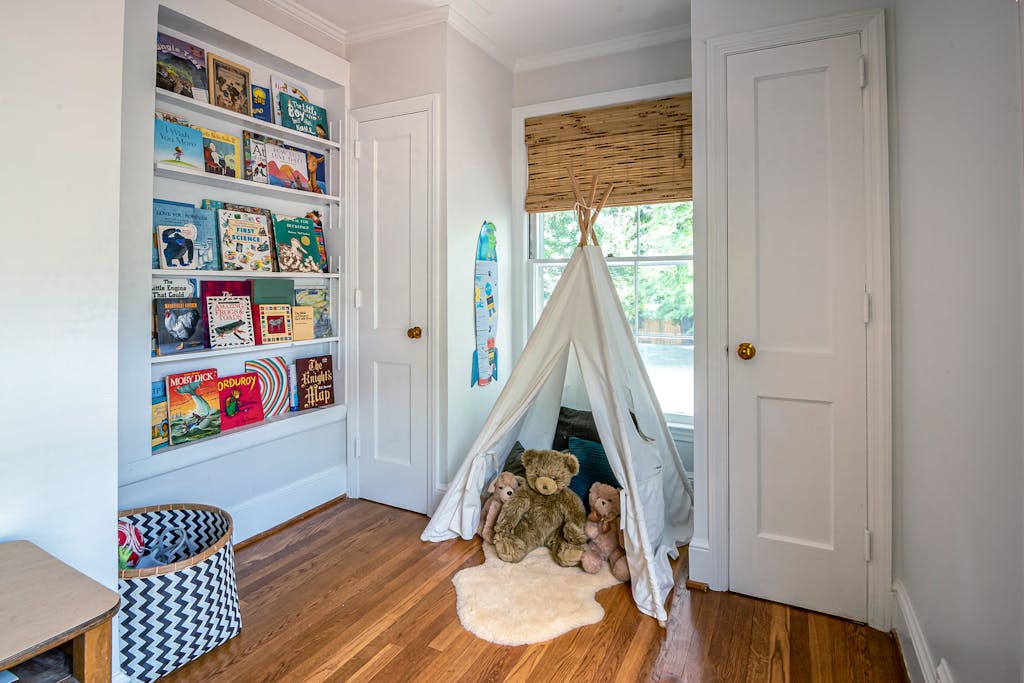
We are not a minimalist family when it comes to books.
If anything, we’ve outgrown our shelves more than once. There are stacks in corners, baskets by beds, and library books constantly rotating through the house.
We love stories here.
But when it comes to my preschooler’s bookshelf, I’ve learned something important.
She doesn’t need access to every book we own.
She needs a small, reachable collection that feels like hers.
So instead of filling her shelf with everything, I’ve started thinking more intentionally about what lives there — what stays within arm’s reach, and what rotates through.
Not fewer books.
Just the right books for this season.
If you’re looking for simple preschool bookshelf ideas, here’s what works in our homeschool.
This post contains affiliate links. As an Amazon Associate, I earn from qualifying purchases at no extra cost to you. We only share books we genuinely use and love in our home.
What Makes a Preschool Bookshelf “Work”
I’ve homeschooled in tighter spaces before — apartments where every shelf had to earn its keep and the table doubled as a desk, art station, and dinner space.
So when I talk about a “cozy preschool bookshelf,” I don’t mean an entire wall of built-ins.
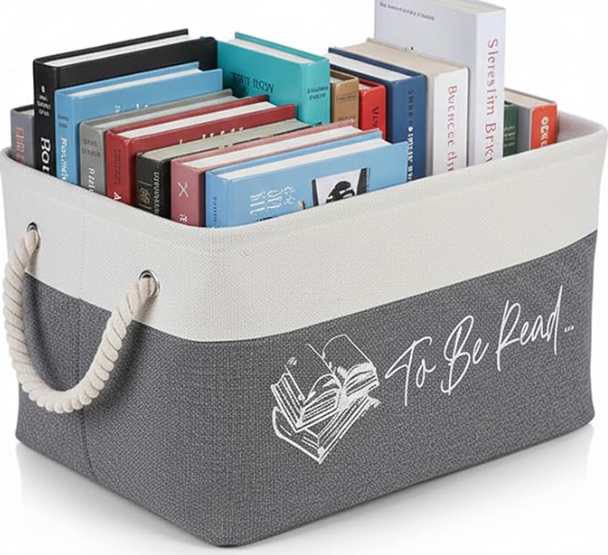
I mean one small, reachable space.
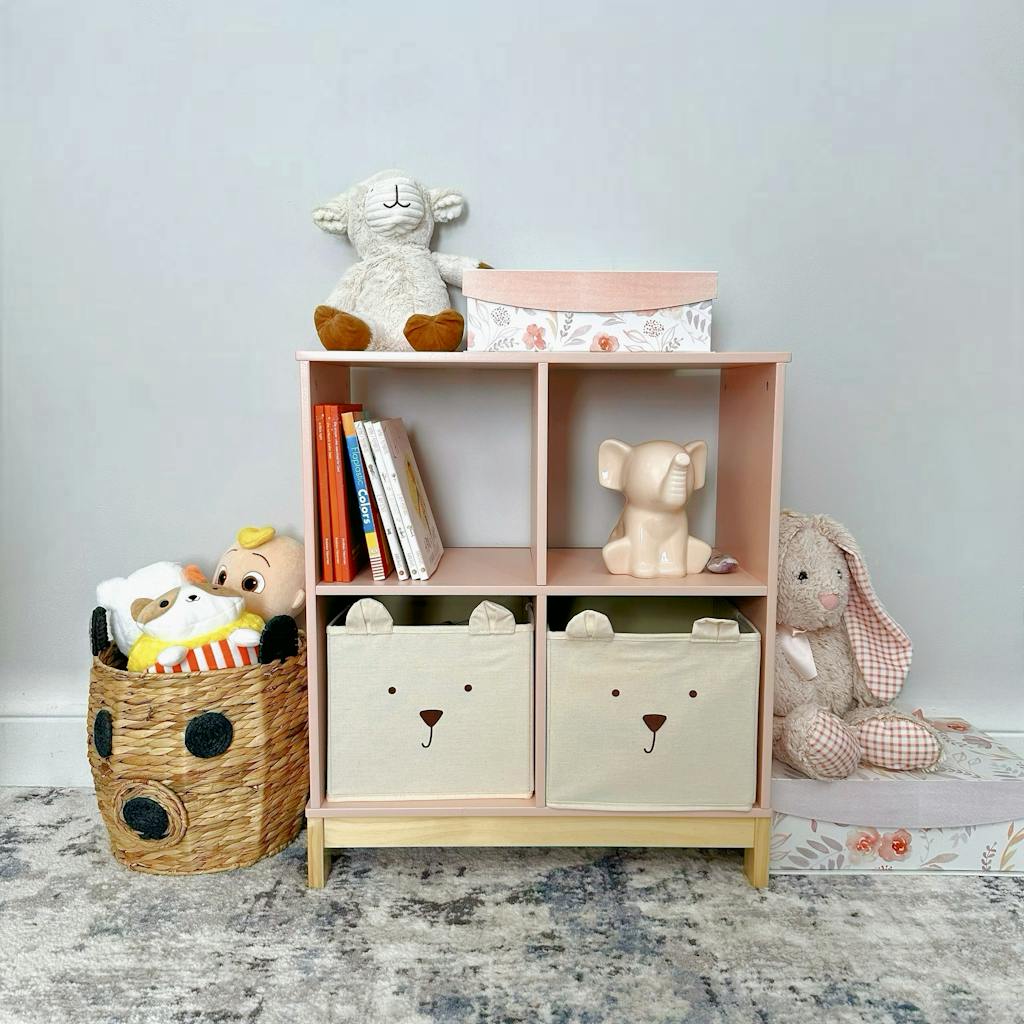
A low shelf. [Like this budget-friendly pocket bookshelf.]
A crate.
A basket beside the couch.
What matters most isn’t how much it holds — it’s how accessible it feels.
For preschoolers, too many options can actually be overwhelming. When everything is visible and within reach, they’re more likely to engage independently.
On my daughter’s shelf in the family room, I try to keep about 10–15 books at a time.
Some are comfort reads.
While some stretch her just a little.
And some rotate with the season.
The rest? They live elsewhere — in bins, on a bookshelf in her room, in older siblings’ rooms, or back at the library.
We don’t need fewer books.
We just need fewer books on the shelf at once.
That small shift makes even a tight space feel intentional.
If you’re curious which books my preschooler actually asks for again, I shared those here.
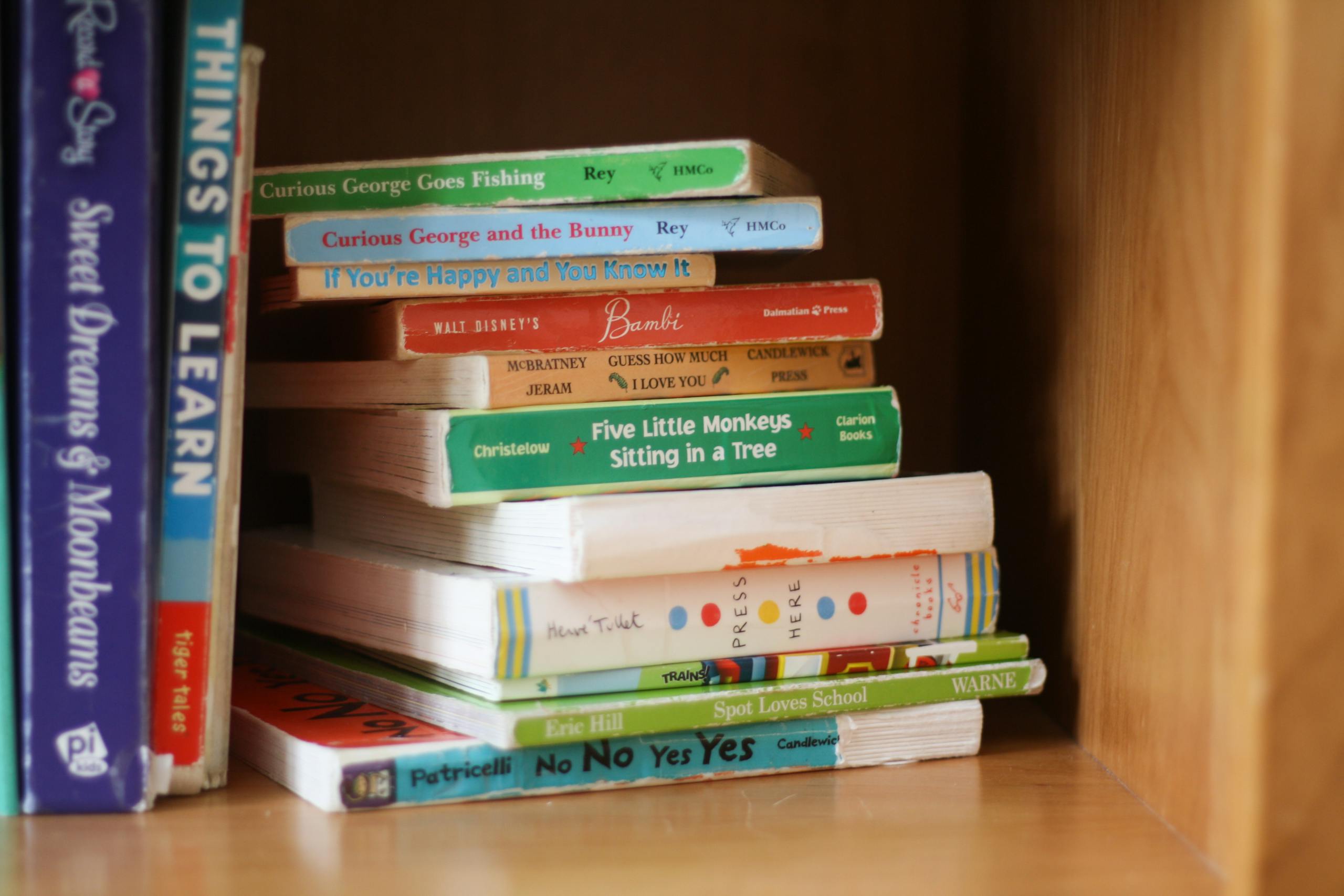
The Board Books That Stay
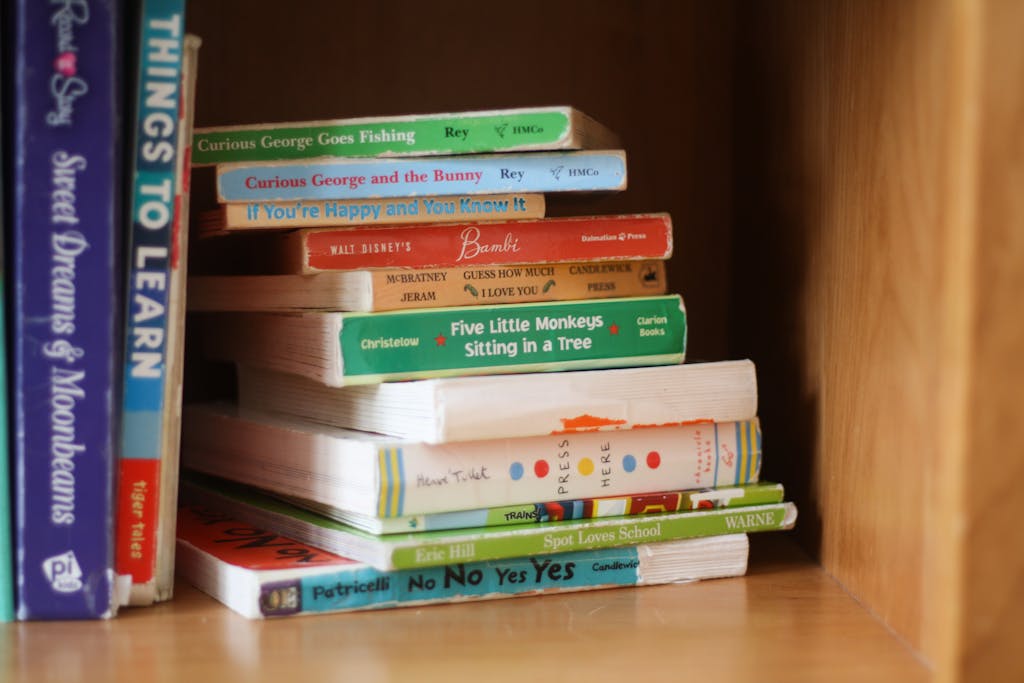
There are dozens of board books that have passed through our home over the years. Some are library favorites. Others were gifts. And some were loved hard and retired quietly (Good Night Moon anyone?).
But on her shelf, I try to keep just a handful at a time — the ones she reaches for without prompting.
For us, that usually includes:
- Rhyming books with predictable cadence
- Animal stories (always animals in this house 🐾)
- Simple “everyday life” stories about bedtime, sharing, or big feelings
- A sturdy nonfiction book with real pictures about babies or animals
Some examples of board books that have stood the test of time are classics:
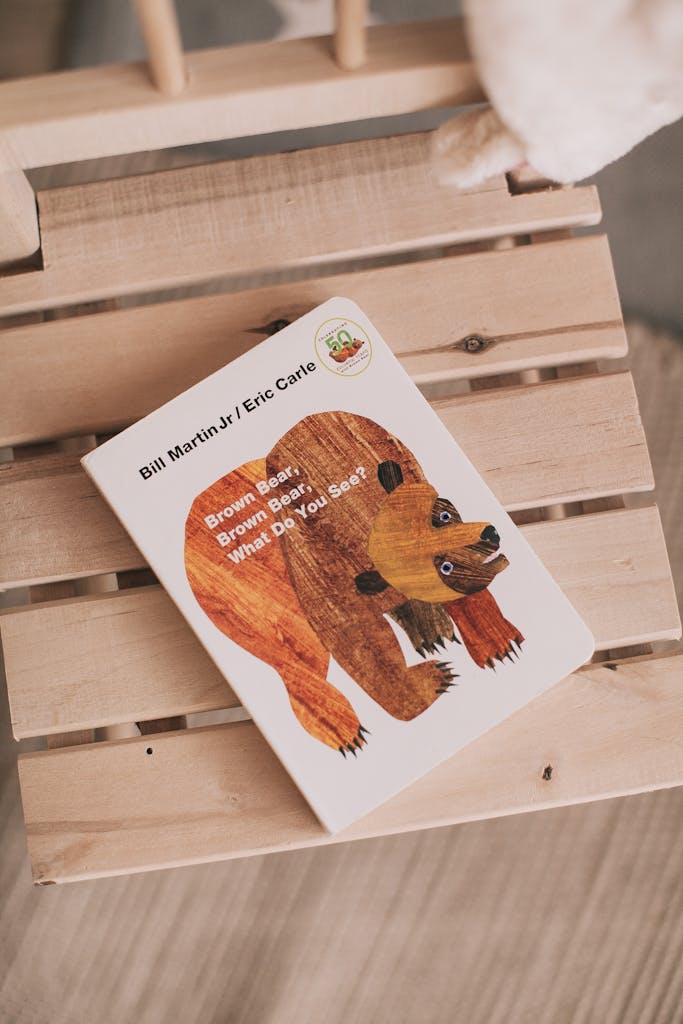
- Brown Bear, Brown Bear by Eric Carle
- Baby Bear, Baby Bear by Eric Carle
- The Very Hungry Caterpillar by Eric Carle
- Good Night, Gorilla by Peggy Rathman
- Goodnight Moon by Margaret Wise Brown
Board books are often the first stories a child can hold independently. They can flip through them on their own. They memorize them and “read” them long before they can decode the words. (Or in the case of my 6 month old, they chew on them.)
And that familiarity builds confidence in quiet ways.
A Small Seasonal Basket
Instead of crowding the main shelf, I keep one small basket nearby for seasonal books.
Pumpkins in the fall.
Snow and hibernating animals in winter.
Flowers and baby animals in spring.
Rotating just a few books at a time keeps things fresh without adding clutter.
In smaller spaces especially, rotation matters more than storage.
You don’t need a huge collection — just a few well-loved stories that change with the season.
Early Readers That Grow With Her
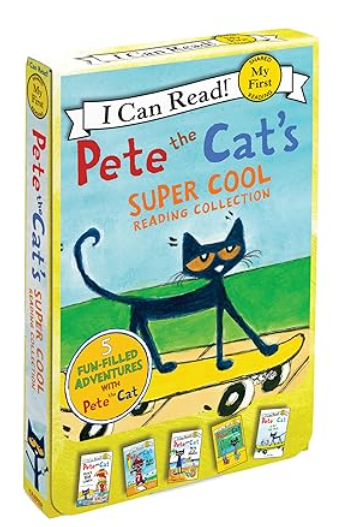
Early readers don’t need to dominate the shelf yet. Just having a small set within reach creates a bridge between being read to and reading independently.
As she moves from listening to beginning to read, I like having one or two early reader sets available. This is one of the sets we have on hand, Pete the Can ‘My First I Can Read’ books.
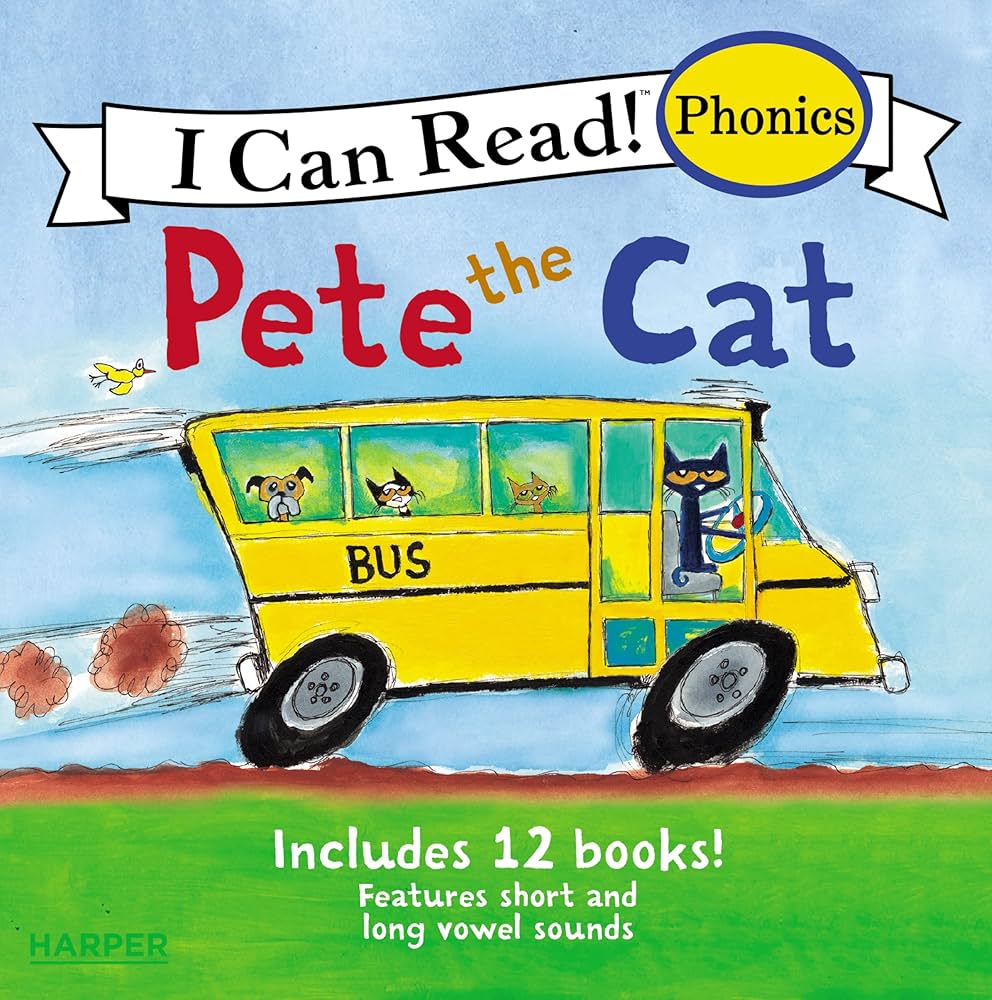
Right now, that looks like the Pete the Cat phonics set we recently added. It’s gentle, repetitive, and just challenging enough to feel exciting.
And I love that the shelf can grow with her — slowly, naturally, without pressure.
A Shelf That Grows With Them
I don’t think building a love of reading requires an entire room full of books.
It starts smaller than that.
A reachable shelf.
A few stories they know by heart.
One or two that stretch them gently.
Over time, those books become more than paper and ink. They become part of the rhythm of home — the stories asked for at bedtime, the ones brought to the couch on quiet afternoons, the ones memorized and “read” back to us.
And when a book is requested again and again, it tells me something.
Those are the ones worth keeping within reach.
Not because we need more things — but because we’re building something steady.
A home where stories are familiar.
Where laughter fills the room.
Where reading feels inviting instead of required.
And sometimes that begins with one small shelf and a few carefully chosen books.